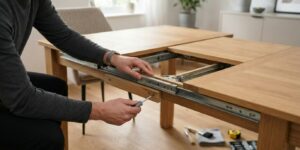
When dining table slides become stuck, opening or closing an extendable dining table can quickly become frustrating. The table may refuse to move, stop halfway, slide unevenly, or make grinding and squeaking noises when you try to extend it.
Fortunately, many problems with dining table extension slides can be fixed at home. Dirt buildup, loose mounting screws, misaligned rails, and a lack of appropriate lubrication are common issues that can interfere with smooth movement. However, bent metal slides, broken rollers, and damaged hardware may require replacement.
In this guide, you will learn how to fix stuck dining table slides, inspect extension rails, clean the mechanism, correct minor alignment problems, and determine when replacement hardware or professional furniture repair may be necessary.
Related guide: For a complete overview of extension mechanisms and additional repair techniques, read our Dining Table Extension Mechanism Repair: DIY Guide.
Why Do Dining Table Slides Get Stuck?
Dining table slides are the rails or runners that allow the tabletop sections to move apart when you need extra seating space. Depending on the table design, these components may be made from metal, wood, or a combination of materials.
Over time, the sliding mechanism can develop problems that make opening and closing the table difficult.
Common causes include:
- Dust and debris: Dirt, crumbs, and wood particles can accumulate inside the rails and interfere with movement.
- Misaligned slides: Extension rails that have shifted out of position may bind when the tabletop moves.
- Loose screws: Loose mounting hardware can allow the slides to move or become uneven.
- Insufficient lubrication: Some metal mechanisms may become stiff when their sliding surfaces need appropriate lubrication.
- Bent rails: Damaged or distorted metal slides can prevent the table from opening smoothly.
- Worn rollers or bearings: Some extension systems use rollers or ball bearings that may wear out over time.
- Wood movement: Changes in humidity can cause wooden components to swell or shift, affecting alignment.
- Obstructions: A loose screw, trapped object, or damaged component may block the mechanism.
Identifying the actual cause is important. Adding lubricant will not correct a bent rail, and tightening screws will not remove debris trapped inside a sliding track.
Tools and Materials You May Need
Before starting the repair, prepare the tools and cleaning materials you may need.
- Screwdriver set
- Soft cleaning brush
- Vacuum cleaner with a narrow attachment
- Microfiber cloth
- Flashlight or work light
- Measuring tape or ruler
- Appropriate lubricant, if recommended for your mechanism
- Replacement screws or hardware, if required
You may not need every item. Start with inspection and cleaning before purchasing replacement parts or applying lubricant.
Step 1: Clear the Table and Inspect the Mechanism
Remove all dishes, decorations, and other items from the tabletop. Make sure there is enough room to open and close the table safely.
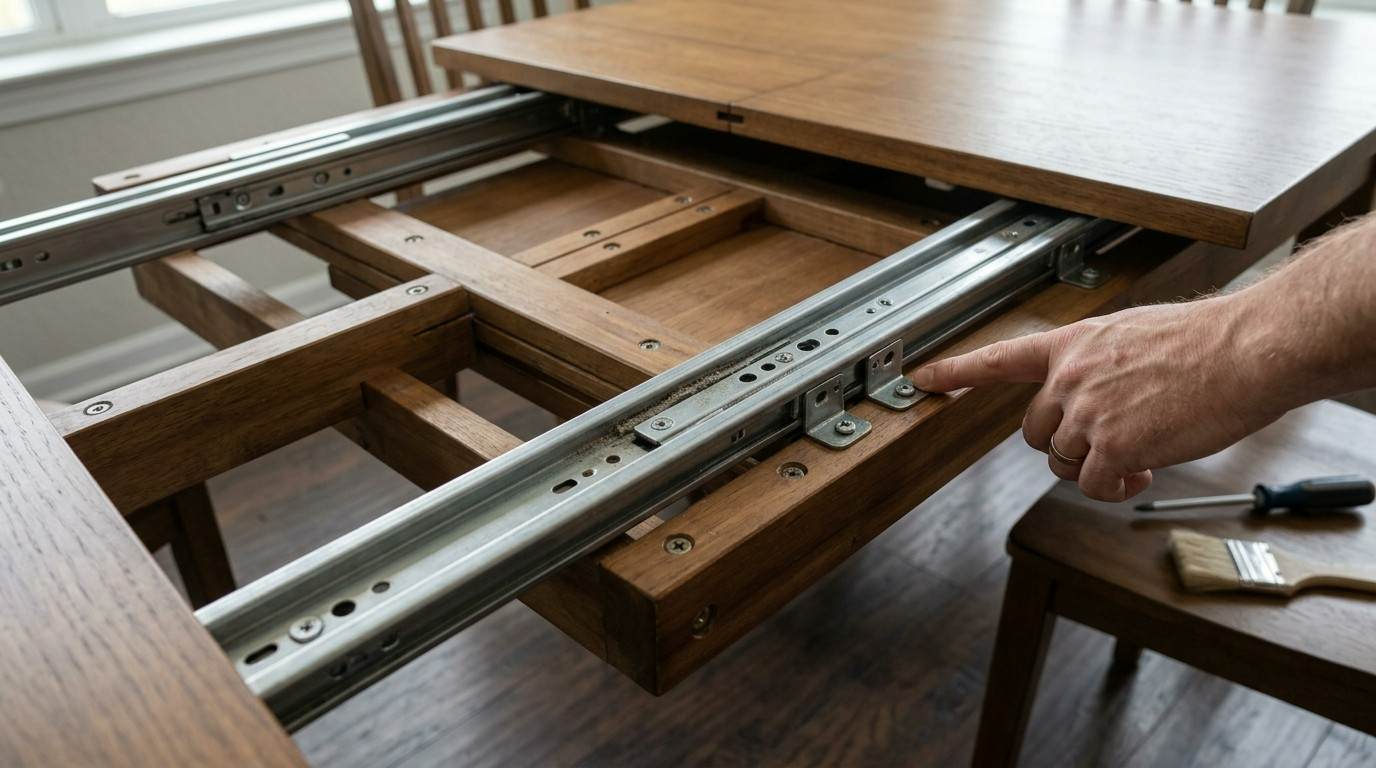
Look underneath the table to identify the extension mechanism. You may find wooden runners, metal sliding rails, telescopic slides, rollers, brackets, or a synchronized extension system.
Check whether the table has a locking mechanism. If it does, make sure the locks are released according to the manufacturer’s instructions.
Next, examine both sides of the table. Look for visible differences in rail position, loose screws, bent brackets, damaged components, or anything blocking the slides.
Do not force the tabletop apart if the mechanism is firmly jammed. Excessive pressure can bend the rails or damage the table frame.
Step 2: Remove Dirt and Debris From the Dining Table Slides
Cleaning is one of the simplest ways to improve the movement of a stuck dining table extension mechanism.
Dust, food crumbs, pet hair, and other debris can collect inside the sliding tracks, especially if the table is extended frequently or stored in a busy dining area.
Follow these steps:
- Use a flashlight to inspect the full length of the accessible extension rails.
- Remove loose debris with a vacuum cleaner and narrow attachment.
- Use a soft brush to clean corners and areas around the mounting brackets.
- Wipe accessible surfaces with a clean cloth, following the hardware manufacturer’s cleaning recommendations.
- If you use a slightly damp cloth, make sure the components are completely dry before testing the mechanism.
Avoid spraying water directly into the slides. Excess moisture can contribute to corrosion on metal hardware and swelling or damage to wooden components.
After cleaning, gently test the table. If it moves more freely, debris may have been contributing to the problem.
Step 3: Check for Loose Screws and Mounting Hardware
Dining table extension slides are attached to the table using screws, brackets, or other mounting hardware. If these connections become loose, the rails may shift out of alignment.
Inspect the mounting points along both sides of the mechanism. Look for screws that have backed out, brackets that move when lightly touched, or visible gaps between the hardware and the wooden frame.
Use the correct screwdriver to tighten loose screws carefully. Avoid overtightening them, especially when they are installed in wood. Excessive force can strip the screw holes and weaken the connection.
If a screw spins without tightening, the hole may be damaged. Do not simply install a larger screw without checking whether the replacement is suitable for the hardware and table construction.
Once the mounting points are secure, check whether the slides sit evenly and test the table again.
Step 4: Correct Minor Slide Alignment Problems
Misalignment can cause extension rails to bind against each other or prevent the tabletop from moving smoothly.
To check alignment, compare the position of the slides on both sides of the table. Look for rails that sit at different angles, mounting brackets that have shifted, or gaps that change noticeably along the length of the mechanism.
If the slides have adjustable mounting points, consult the manufacturer’s instructions before making changes.
For a minor adjustment, you may need to loosen the relevant mounting screws slightly, reposition the rail, and retighten the hardware. Make small changes and check the alignment frequently.
Do not bend metal rails to make them fit. A visibly bent or distorted slide may need to be replaced.
If the table uses synchronized extension hardware, a problem on one side may affect the movement of the entire mechanism. Follow the manufacturer’s repair instructions rather than adjusting individual components at random.
Step 5: Lubricate the Slides if Necessary
If the extension slides are clean and properly aligned but still feel stiff, lubrication may help. However, not all dining table mechanisms require the same type of lubricant.
Some manufacturers recommend a particular dry-film lubricant, silicone-based product, or other lubricant suitable for the hardware. Wooden runners may require a different maintenance approach from metal telescopic slides or ball-bearing mechanisms.
Before applying anything, check the manufacturer’s instructions or the specifications for the extension hardware.
If lubrication is appropriate:
- Clean the rails first and remove any loose debris.
- Apply a small amount of the recommended lubricant to the specified sliding surfaces.
- Wipe away excess product to reduce the chance of attracting dirt.
- Move the table gently through its normal range of travel, if it can be operated safely.
- Check whether the movement has improved and whether any residue needs to be removed.
Do not automatically use a general-purpose penetrating spray or household oil. The wrong product can leave residue, attract dust, affect certain materials, or fail to provide the lubrication required by the mechanism.
Remember that lubrication cannot repair broken bearings, bent rails, or damaged gears.
Step 6: Check for Damaged Rollers, Bearings, or Rails
If cleaning, tightening, and appropriate alignment adjustments do not solve the problem, inspect the mechanism for physical damage.
Depending on the design, the table may use rollers, ball bearings, telescopic rails, plastic guides, or other moving parts.
Look for:
- Rails that are visibly bent or twisted
- Cracked mounting brackets
- Missing or damaged rollers
- Loose or damaged ball-bearing components
- Broken plastic guides
- Metal parts that scrape against each other
- Components that separate or come loose during movement
Stop using the extension mechanism if you find a broken component that could cause the tabletop to become unstable. Avoid disassembling spring-loaded or heavily loaded hardware unless you understand the mechanism and can follow the appropriate safety instructions.
Damaged components may need replacement rather than further adjustment.
How to Fix Dining Table Slides That Stop Halfway
If your dining table slides move for a short distance and then stop, focus on the point where the movement becomes restricted.
First, stop pulling. If the table can be moved safely, gently return it toward its starting position. Inspect the rails and nearby hardware for an obstruction, loose screw, damaged roller, or bent section of metal.
Check whether the problem occurs at the same point each time. A consistent stopping point may indicate a physical obstruction, damaged rail section, or an issue with the mechanism’s travel limits.
Clean the affected area and correct any obvious loose hardware. If the rails appear damaged or the table remains firmly stuck, do not continue forcing it.
If the problem persists, read our related guide on How to Fix a Dining Table That Won’t Open for additional troubleshooting steps.
When Should You Replace Dining Table Slides?
Not every stuck mechanism can be repaired through cleaning and adjustment. Replacement may be the most practical solution when the hardware is worn, damaged, or no longer operating correctly.
Consider replacing the slides if:
- The metal rails are bent or badly distorted.
- Rollers or bearing assemblies are broken.
- The slides repeatedly jam despite proper cleaning and adjustment.
- The mounting hardware can no longer hold the mechanism securely.
- Internal components are damaged or unavailable for repair.
Before buying replacement slides, measure the existing hardware carefully. Check the closed length, extended length, mounting configuration, load requirements, and screw-hole positions. Confirm that the replacement is compatible with the table design.
Extension slides are not universally interchangeable. A product that looks similar may have a different travel distance, mounting arrangement, or weight capacity.
If the table is heavy, valuable, or difficult to disassemble, consider asking a furniture repair professional to identify and install the correct hardware.
Common Mistakes to Avoid When Repairing Dining Table Slides
- Pulling too hard: Excessive force can bend rails and damage the table frame.
- Applying lubricant before cleaning: Lubricant may mix with dust and debris, making the mechanism harder to clean.
- Using the wrong lubricant: Follow the hardware manufacturer’s recommendations.
- Overtightening screws: This can strip wood screw holes or damage mounting points.
- Adjusting both sides randomly: Make small, controlled adjustments and test the mechanism after each change.
- Ignoring visible damage: Bent rails and broken rollers generally require repair or replacement.
- Buying incompatible slides: Measure the original hardware and verify compatibility before ordering replacement parts.
How to Maintain Dining Table Extension Slides
Regular maintenance can help prevent future problems and extend the useful life of your dining table hardware.
- Inspect the extension rails periodically for dust and debris.
- Clean the accessible tracks when needed.
- Check mounting screws and brackets for looseness.
- Open and close the table evenly without jerking it.
- Follow the manufacturer’s lubrication and maintenance instructions.
- Address unusual noises or resistance before the mechanism becomes completely stuck.
- Keep the table and its extension components dry and in a suitable environment.
For additional advice about maintaining and repairing different types of extension systems, visit our Dining Table Extension Mechanism Repair: DIY Guide.
Frequently Asked Questions
Why are my dining table slides stuck?
Common causes include dirt buildup, misalignment, loose screws, inadequate lubrication, damaged rollers, and bent rails. Inspect the mechanism before deciding which repair is appropriate.
Can I fix stuck dining table slides without replacing them?
Yes. If the problem is caused by dirt, loose mounting hardware, or a minor alignment issue, cleaning and careful adjustment may restore normal movement. Severely worn or damaged slides may need replacement.
What is the best lubricant for dining table slides?
The best option depends on the type of slide and the manufacturer’s specifications. Check the hardware instructions before applying lubricant, and use only the recommended product in the appropriate amount.
How do I know if dining table slides are damaged?
Visible bending, cracked brackets, broken rollers, missing components, scraping metal, or repeated jamming may indicate physical damage. Stop using the mechanism if the damage makes the tabletop unstable.
Can I replace dining table extension slides myself?
Replacement may be possible as a DIY project if the hardware is accessible and you can safely support the tabletop. Measure the existing slides and verify compatibility before purchasing replacement hardware. Heavy or complicated tables may require professional assistance.
Why do my dining table slides work on one side but not the other?
The mechanism may be misaligned, a mounting screw may be loose, or one side may contain damaged hardware. Inspect both sides carefully. Synchronized mechanisms may require model-specific adjustment procedures.
Keep Your Dining Table Slides Moving Smoothly
Stuck dining table slides do not always mean that the entire extension mechanism needs to be replaced. In many cases, removing debris, checking the mounting hardware, correcting minor alignment problems, or applying the correct lubricant can improve the movement.
Start with simple inspection and cleaning, then move on to careful adjustments if necessary. If you find bent rails, broken rollers, damaged bearings, or other serious hardware problems, replacement may be the safer and more reliable option.
With regular maintenance and careful use, your extendable dining table can continue opening and closing smoothly. For a more comprehensive repair reference, read our Dining Table Extension Mechanism Repair: DIY Guide.