Wood furniture adds warmth, character, and timeless beauty to any home. Over time, however, dust, grime, oils, stains, and everyday wear can dull its natural shine. The good news? You don’t need expensive products or professional services to restore your wood furniture’s beauty. With the right techniques, tools, and a little patience, you can make your wood furniture look almost brand new again.
This comprehensive guide will walk you through everything you need to know—from identifying wood finishes to deep cleaning, polishing, and long-term care.
Why Proper Wood Furniture Cleaning Matters
Wood is a living material that reacts to moisture, heat, and chemicals. Using the wrong cleaning method can strip finishes, cause discoloration, or even lead to cracking and warping. Proper cleaning:
- Preserves the wood’s natural grain and color
- Extends the lifespan of your furniture
- Prevents buildup of dirt and oils
- Maintains or restores its original shine
Step 1: Identify the Type of Wood Finish
Before cleaning, it’s important to know what type of finish your furniture has. Different finishes require different care.
Common Wood Finishes
- Varnish or Polyurethane: Durable and water-resistant, commonly found on dining tables and cabinets.
- Lacquer: Smooth and glossy, often used on modern furniture.
- Shellac: Traditional finish that is sensitive to alcohol and water.
- Oil Finish: Absorbed into the wood, giving a natural matte look.
Quick test: Dab a small amount of rubbing alcohol on a hidden area. If the finish dissolves, it’s shellac. If not, it’s likely varnish or lacquer.
Step 2: Remove Surface Dust the Right Way
Dusting seems simple, but doing it incorrectly can scratch the surface.
Best Practices for Dusting
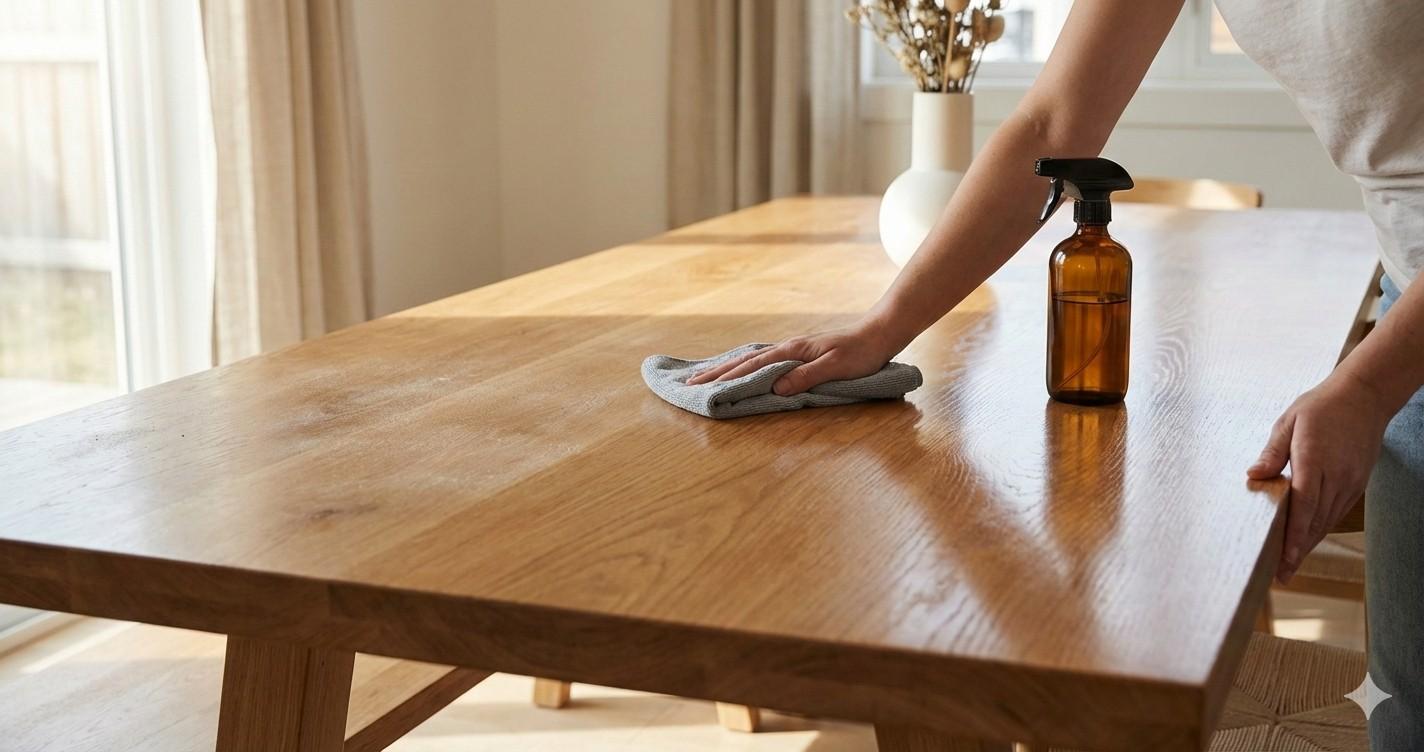
- Use a soft microfiber or lint-free cloth
- Lightly dampen the cloth to trap dust instead of spreading it
- Avoid feather dusters, which can scratch finishes
Dust at least once a week to prevent buildup that can become harder to remove later.
Step 3: Gentle Cleaning for Everyday Dirt
For routine cleaning, you only need mild ingredients.
Simple Wood Furniture Cleaner (DIY)
- 1 cup warm water
- A few drops of mild dish soap
Dip a soft cloth into the solution, wring it out thoroughly, and wipe the surface gently. Follow immediately with a dry cloth to remove moisture.
Important: Never soak wood furniture. Excess water can seep into joints and cause swelling or warping.
Step 4: Deep Clean Grime and Sticky Residue
Kitchen cabinets, dining tables, and armrests often accumulate grease and body oils.
Vinegar Solution for Heavy Dirt
- 1 part white vinegar
- 1 part warm water
Lightly dampen a cloth with the solution and wipe along the grain. Immediately dry the surface.
Note: Vinegar should be used sparingly and never on waxed or shellac finishes.
Step 5: Remove Stains and Water Marks
White rings and dark spots are common issues with wood furniture.
Fixing White Water Rings
- Apply a small amount of non-gel toothpaste to a soft cloth
- Rub gently along the grain
- Wipe clean and dry
Removing Dark Water Stains
Dark stains usually mean moisture has penetrated the wood. Light sanding followed by refinishing may be required for severe cases.
Step 6: Restore Shine with Natural Polish
Polishing revives dull wood and enhances its natural beauty.
DIY Wood Polish Recipe
- 1/2 cup olive oil or mineral oil
- 1/4 cup white vinegar or lemon juice
Apply a small amount to a soft cloth and rub into the wood following the grain. Buff with a clean cloth for a natural shine.
Step 7: Fix Scratches and Minor Damage
Minor scratches don’t always require refinishing.
Quick Scratch Fixes
- Use a walnut or pecan to rub over light scratches
- Apply wood touch-up markers matching the furniture color
- Use furniture wax sticks for deeper scratches
Step 8: Protect Your Wood Furniture
Prevention is key to keeping furniture looking new.
- Use coasters and placemats
- Avoid direct sunlight to prevent fading
- Maintain indoor humidity levels
- Clean spills immediately
Common Wood Cleaning Mistakes to Avoid
- Using harsh chemicals or ammonia-based cleaners
- Spraying cleaner directly onto wood
- Over-polishing, which causes buildup
- Ignoring manufacturer care instructions
How Often Should You Clean Wood Furniture?
- Dusting: Weekly
- Light cleaning: Monthly
- Polishing: Every 3–6 months
- Deep cleaning: As needed
When to Consider Professional Restoration
If your furniture has deep scratches, extensive water damage, or peeling finishes, professional restoration may be the best option to preserve its value.
Cleaning wood furniture properly is both an art and a habit. By using gentle methods, natural cleaners, and consistent care, you can bring back the warmth, shine, and elegance of your wood furniture—often making it look as good as the day you bought it. A little effort goes a long way in preserving the beauty and longevity of your treasured pieces.